Administration, Liquidation or SBR: Which Fits?
By Doug Constable · 24 October 2026
Every week someone sits across from me with the same question, usually phrased three different ways. Should I put the company into administration? Is it too late to restructure? Do I just liquidate and be done with it?
The honest answer is that the right path depends on two things: whether the business underneath the debt can still make money, and how far the problems have run. Pick the wrong path and you either kill a business that could have been saved, or pour good money into one that couldn't.
Here's how the three main options compare, in plain English.
Small Business Restructuring: you stay in the driver's seat
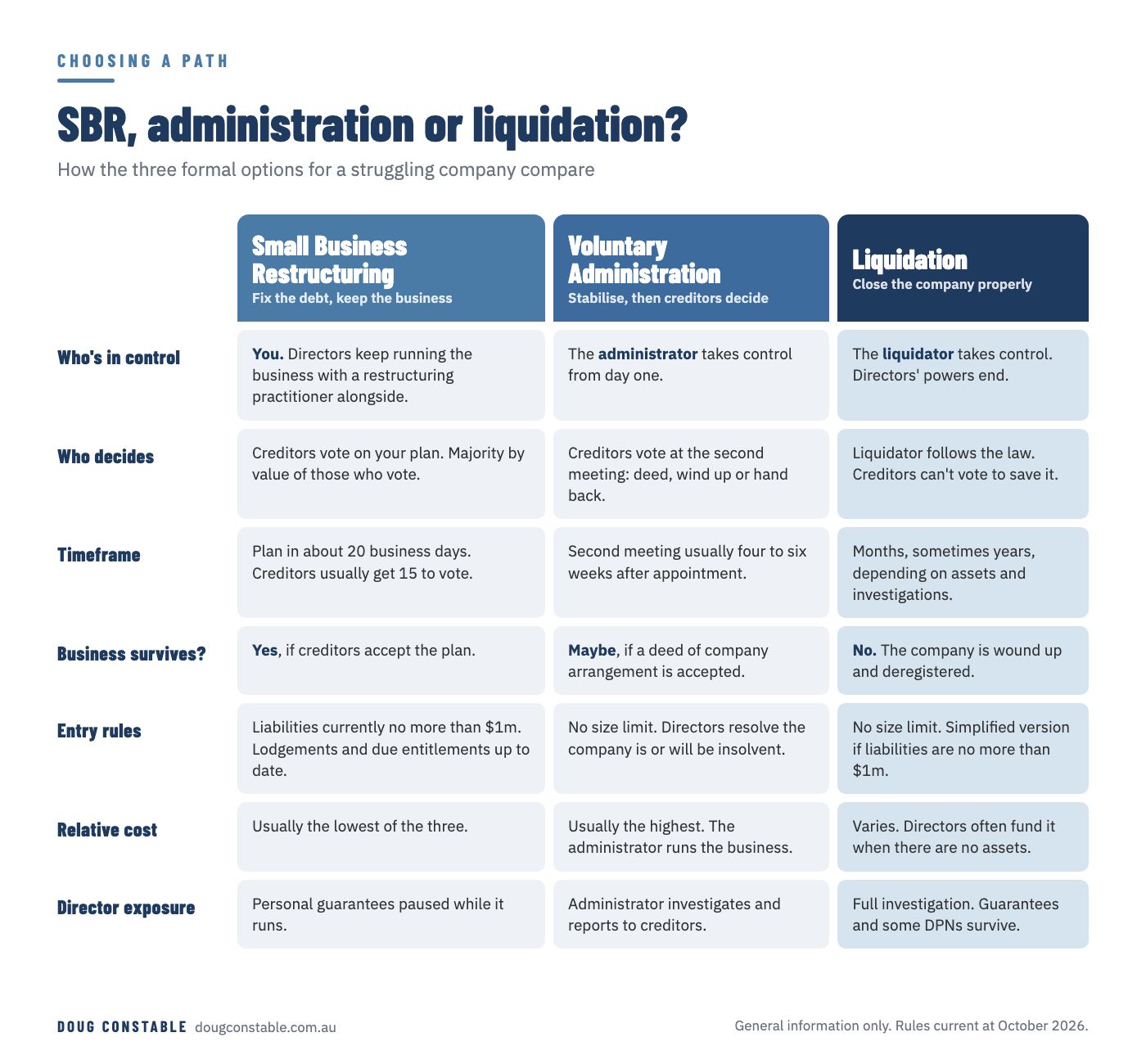
SBR was built for the small company that's in trouble but still has a real business underneath. The directors keep running the company day to day. A restructuring practitioner is appointed to help put together a plan to pay creditors part of what they're owed, usually over time, and the rest of the debt is gone once the plan is done.
The timetable is tight. The plan generally has to be ready within 20 business days, with one short extension available. Creditors then usually have 15 business days to vote, and the plan is accepted if a majority by value of the creditors who vote say yes. Plan payments can't run past three years.
To get in the door, the company currently needs total liabilities of no more than $1 million on the day the practitioner is appointed, its tax lodgements up to date, and employee entitlements that are due paid. There are also seven-year look-back rules, both on the company and on its directors' other companies.
One thing directors often don't know: while the restructuring is under way, creditors can't chase you, your spouse or relatives on personal guarantees for the company's debts without the court's permission. That breathing space ends when the plan is in place or the restructuring ends.
The catch is that creditors have to believe the plan. I've written separately about why fewer plans are getting over the line. A weak plan, put up late, gets voted down, and then you're looking at one of the other two options anyway.
Voluntary Administration: someone else takes the wheel
In a voluntary administration, the directors hand control of the company to an independent administrator. The administrator runs the business for a short period, investigates its affairs and reports to creditors on the best way forward.
There's a first meeting of creditors within eight business days, then a second meeting, usually four to six weeks after appointment, where creditors decide the company's future. They have three choices: accept a deed of company arrangement (a deal that usually pays creditors something and lets the business continue), wind the company up, or, rarely, hand it back to the directors.
Administration is the tool for businesses that are too big or too complicated for SBR, have fallen behind on lodgements or entitlements, or need someone with real authority to stabilise things fast. It's more expensive, because the administrator is running the show and carrying the risk. And there's no guarantee of a deed. If nobody puts up a workable proposal, administration usually ends in liquidation.
Liquidation: closing the book properly
A creditors' voluntary liquidation is the end of the company. The liquidator takes control, sells whatever assets there are, investigates what went wrong and pays creditors in the order the law sets out. Then the company is deregistered.
Liquidation is the right call when there's no viable business left, or when the debts are simply too big for any plan to fix. Done properly and early, it stops the bleeding, stops creditors chasing the company and lets you move on.
But liquidation is where directors get caught out. The liquidator has a duty to investigate, and that includes looking at whether the company traded while insolvent, whether any payments to related parties or favoured creditors need to be clawed back, and whether the books were kept properly. Personal guarantees you signed don't disappear when the company does. And depending on the type of director penalty notice you've received, the ATO may still come after you personally for unpaid PAYG withholding, GST and super.
For smaller companies there is a simplified liquidation process with less paperwork and no creditor meetings. It has similar entry rules to SBR, including liabilities of no more than $1 million and tax lodgements up to date, and directors have to declare the company hasn't been involved in illegal phoenix activity.
The comparison at a glance
So which one fits?
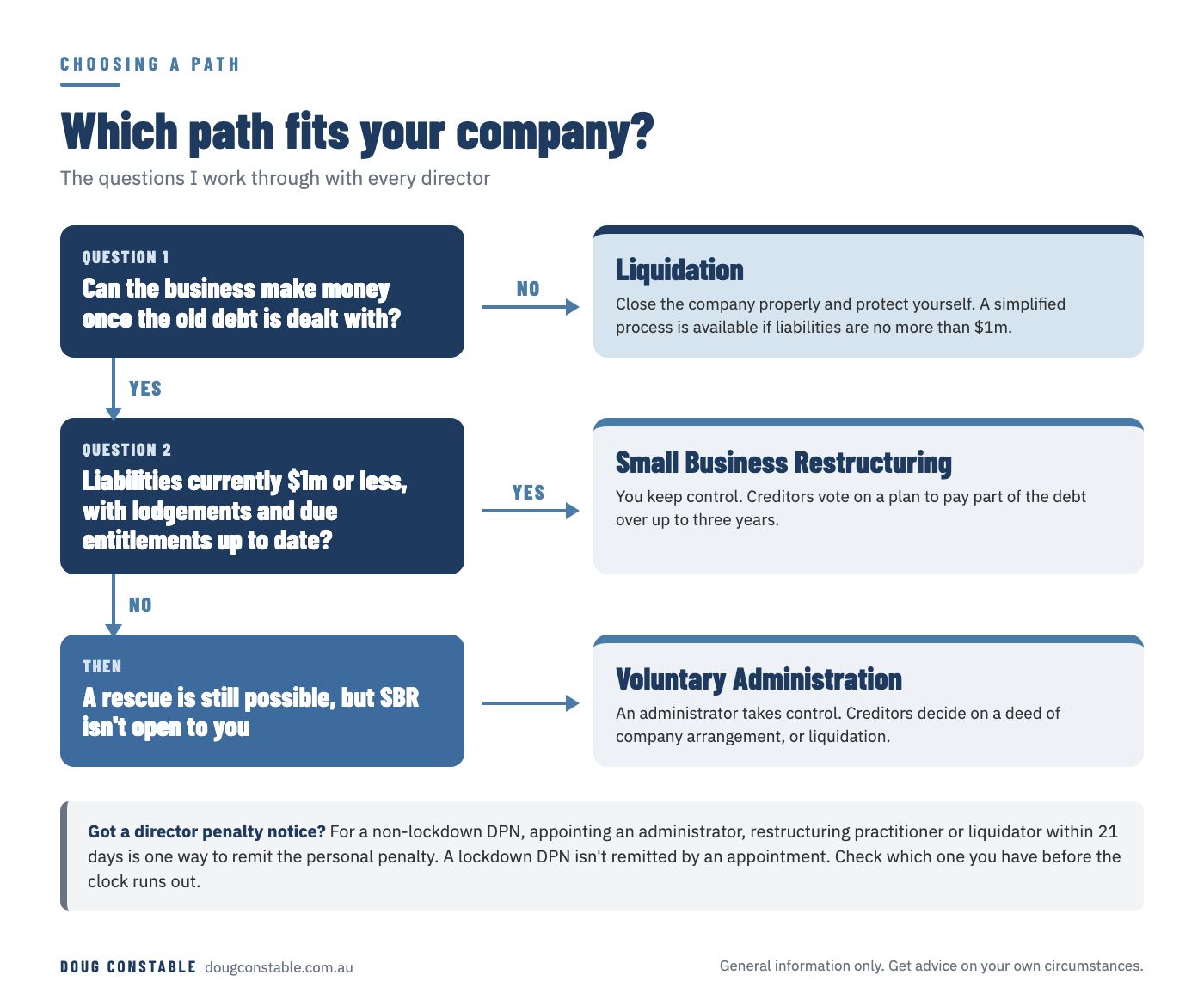
I start every one of these conversations with the same questions.
Is there still a business here? If the business can make a profit once the old debt is dealt with, you're looking at SBR or administration. If it can't, you're looking at liquidation, and the job is to do it properly and protect yourself in the process.
Can you qualify for SBR? If liabilities are under the threshold and your lodgements and employee entitlements are up to date, SBR is usually the cheapest and least disruptive way to save the business. If they're not, administration may be the only rescue option left.
Do you need to keep control? In SBR you keep running the business. In administration and liquidation, you don't.
Is a director penalty notice sitting on your desk? For a non-lockdown DPN, appointing an administrator, a restructuring practitioner or a liquidator within 21 days is one of the ways to remit the personal penalty. Miss the 21 days and that option is gone. A lockdown DPN is a different story: an appointment won't remit it.
The mistake I see most
The most expensive mistake isn't choosing the wrong option. It's waiting so long that only one option is left.
Every month a director spends hoping things turn around, creditors get more impatient, lodgements slip, entitlements build up and the SBR door quietly closes. By the time most people come to see me, the choice has often been made for them.
If you can see the pressure building, have the conversation now, while you still have three doors to choose from. I'll work through the numbers with you, help you work out which path fits, and put you in front of the right registered practitioner to run it. I work for you, not the creditors.
- Speak directly to Doug: Get help
- Business recovery, SBR and liquidation: Resolve Business Solutions
- Independent bankruptcy help: Resolvency
- Read more insights
This article is general information only. It is not legal or financial advice. Eligibility rules and thresholds can change; get advice on your own circumstances from a registered liquidator or lawyer.
No robes. No wigs. Just results.