Signed a Personal Guarantee? Read This First
By Doug Constable · 24 October 2026
If you signed a personal guarantee for your company's debts, liquidating the company does not make that debt go away. The creditor simply stops chasing the company and starts chasing you, and if the guarantee is secured over your home, the house is on the table.
I've been doing this work for 38 years, and the personal guarantee is the thing that catches directors off guard more than anything else. They put the company into liquidation thinking it draws a line under everything. A few weeks later the letters start arriving at home.
Where guarantees hide
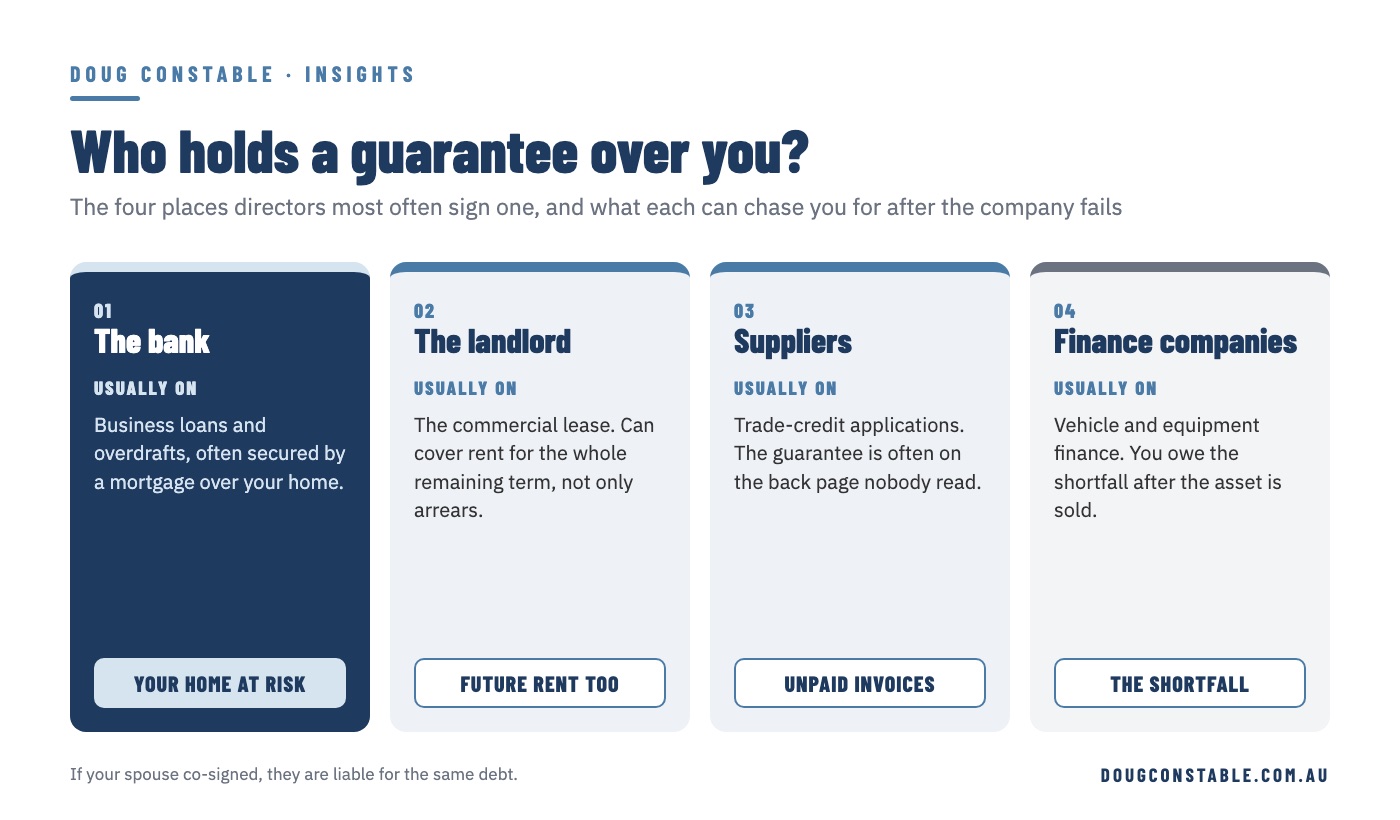
Most directors know about the bank guarantee. They remember signing it because it came with a mortgage over the family home. What they forget are the others.
- Your lease. Almost every commercial landlord asks for a director's guarantee, and it often covers the full remaining term, not only the rent owing today.
- Trade-credit accounts. That one-page credit application you signed with a supplier years ago? There's a good chance the back page was a personal guarantee.
- Equipment and vehicle finance. Usually guaranteed, and the shortfall after the asset is sold comes back to you.
- Your spouse. Lenders often ask the director's partner to co-sign. If they did, they are on the hook for the same debt.
The guarantee is a separate contract between you and the creditor. It survives the company being wound up, it survives the company being deregistered, and it survives you resigning as a director. Unless the creditor has formally released you in writing, assume it's still live.
What a creditor can do to you
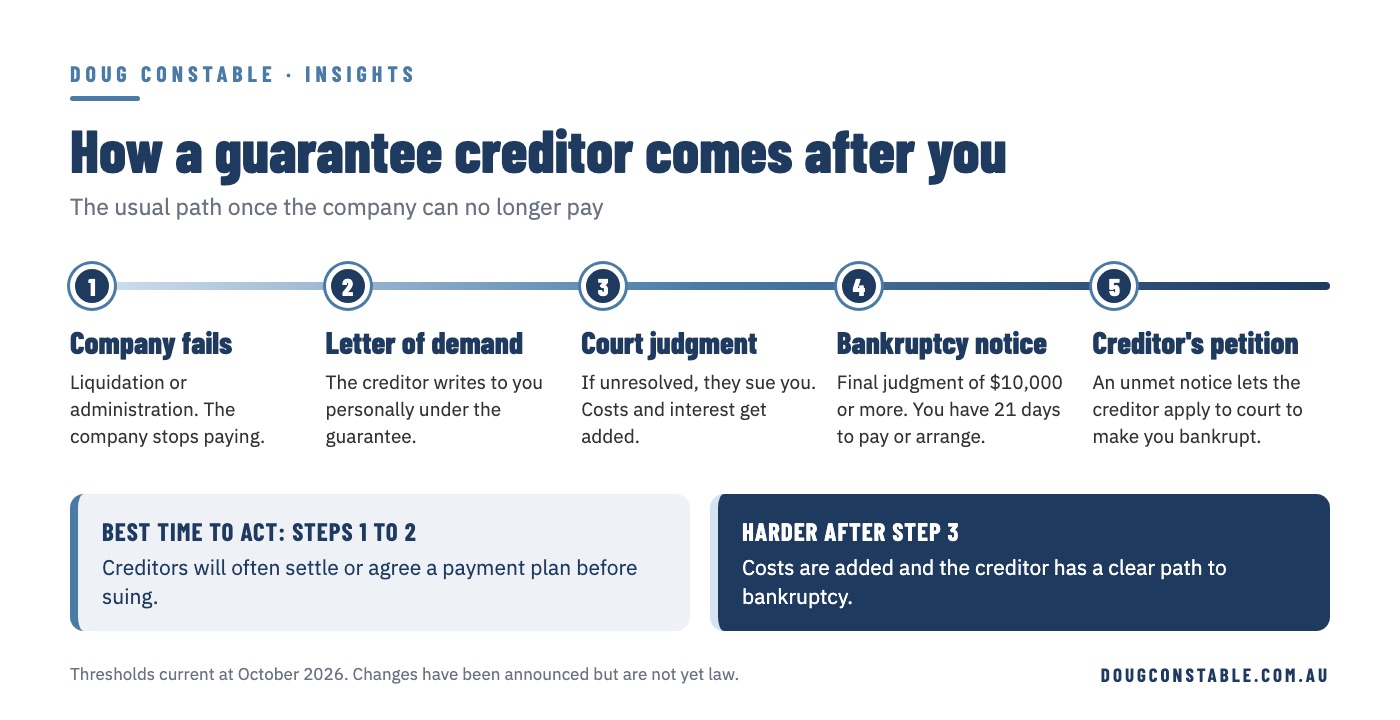
When the company can't pay, a creditor holding your guarantee will usually move in this order. First a letter of demand to you personally. If that isn't resolved, they sue you and get a judgment. Once they have a final judgment of at least $10,000, they can serve you with a bankruptcy notice, and you have 21 days to pay or come to an arrangement. If you don't, that unpaid notice is an act of bankruptcy and the creditor can apply to court to make you bankrupt.
The government has announced plans to lift that $10,000 threshold and give people longer to respond, but until those changes are law, $10,000 and 21 days is what applies.
If the guarantee is secured by a mortgage, the creditor may not need to go to court at all to pursue the property. That's why the bank guarantee is usually the most serious one in the pile.
Why waiting is the worst option
Directors who come to see me early nearly always have more choices than the ones who come late. Before a judgment, a creditor will often take a negotiated settlement or a payment arrangement, because it's cheaper than suing. After a judgment, legal costs and interest have been added and the creditor has a clear path to bankruptcy, so their appetite to negotiate drops.
There's another reason to move early. In a company insolvency, the order things happen in matters. Which debts get paid, which assets are sold, and when, can change how much ends up being claimed against you personally under your guarantees.
What to do this week
- Find every document. Pull the loan agreement, the lease, every credit application and every finance contract. Read the guarantee clause in each one.
- Make a list. Who holds a guarantee, how much is owing, and whether it's secured over property.
- Check your spouse's exposure. If they co-signed, they need to understand where they stand too. In limited circumstances a court can set aside a guarantee a spouse signed without understanding it, but that is not something to bank on.
- Talk to the creditors early, through someone in your corner, before the lawyers get involved.
- Look at your personal options. If the guaranteed debts are more than you can ever repay, there are formal personal insolvency options, including a personal insolvency agreement or bankruptcy. Guarantee debts are generally covered by bankruptcy, although a secured creditor keeps its security.
My role is to sit on your side of the table, sort through what you've signed, and coordinate the right insolvency practitioner and legal help for your situation. Creditors have their own people. You should have someone too.
Quick answers
Does liquidation cancel my personal guarantee?
No. The guarantee is a separate contract with you. The creditor can pursue you once the company can't pay.
Can I get out of a guarantee by resigning as a director?
No. Resigning doesn't end a guarantee you've already signed. Only a written release from the creditor does that.
Is my spouse liable if they signed too?
Yes, if they signed as a guarantor they are liable for the same debt. They should get their own independent advice.
- Speak directly to Doug: Get help
- Business advisory and recovery: Resolve Business Solutions
- Independent bankruptcy help: Resolvency
- Read more insights
This is general information, not legal or financial advice. Every situation is different.
No robes. No wigs. Just results.